Checking your levels between doctor visits? Search Amazon for:
Home Cholesterol Test KitsFor general information only. Always discuss your cholesterol results with your doctor or healthcare provider.
Cholesterol Testing at Home
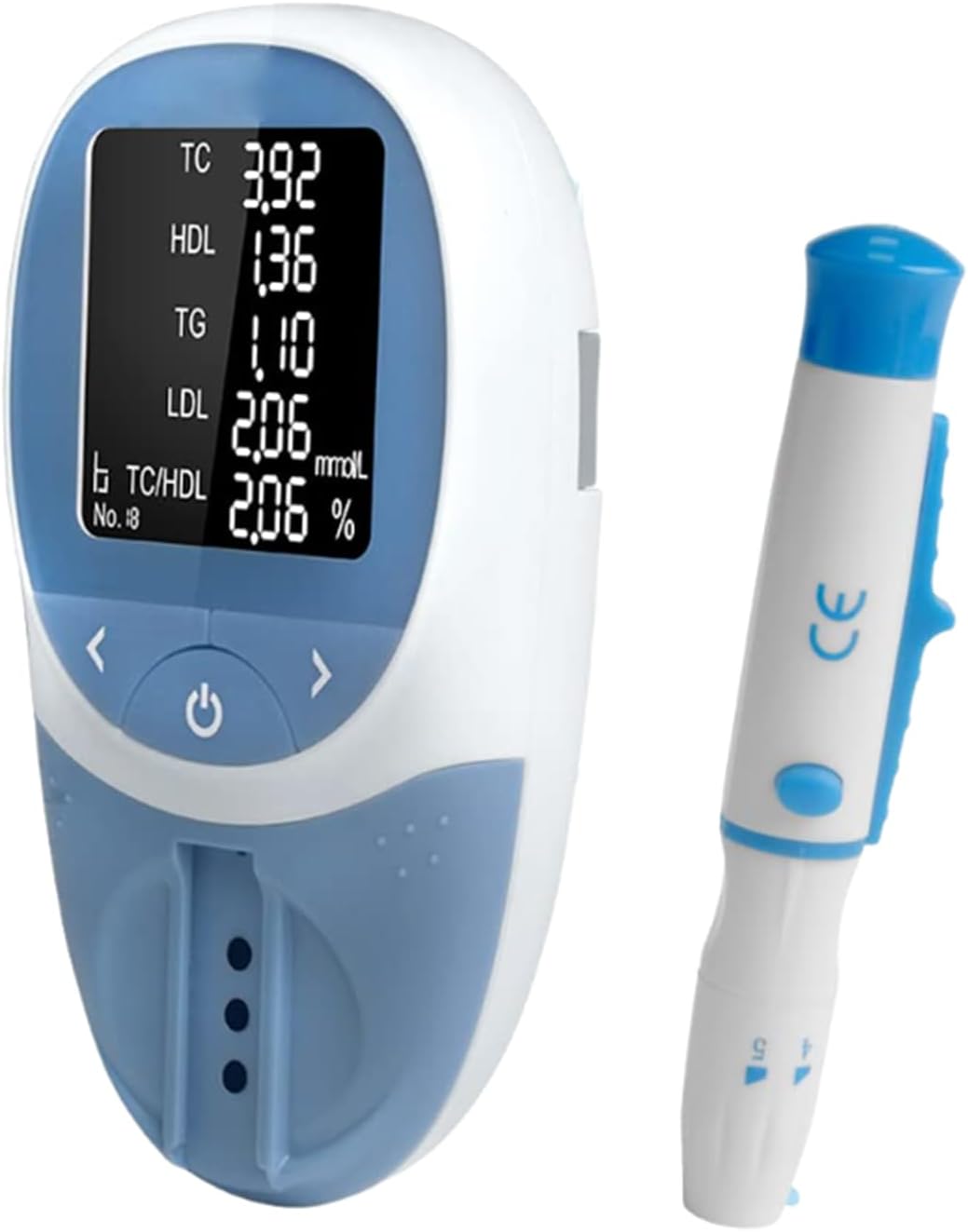


Why Are There Two Different Units for Cholesterol?
If you have received a cholesterol test result in the United States and then looked at international research, a British or European health website, or the display on an imported home testing device, you may have noticed that the numbers look completely different. A total cholesterol of 201 in the US becomes 5.2 in the UK. Both describe the same level. They are simply two ways of measuring the same thing.
The Unit Used in the United States: mg/dL
Milligrams per deciliter (mg/dL) is the standard unit used across the United States and a small number of other countries. Lab results from your doctor, guidelines from the American Heart Association, and US-based cholesterol tracking apps all express cholesterol in mg/dL. The measurement represents the weight of cholesterol per volume of blood.
The Unit Used in the UK, Europe, and Most of the World: mmol/L
Millimoles per liter (mmol/L) is the standard unit used across the United Kingdom, Europe, Canada, Australia, and most of the rest of the world. International research papers, European cardiovascular risk tools, and many health resources published outside the US all use mmol/L. The numbers appear much smaller because the measurement represents molecular concentration rather than weight per volume.
The Conversion Factor
Unlike blood glucose, cholesterol requires a different conversion factor because it is a different molecule with a different molecular weight. The conversion factor for cholesterol is fixed and permanent:
To convert mg/dL to mmol/L: divide by 38.67
To convert mmol/L to mg/dL: multiply by 38.67
Note: This applies to total cholesterol, LDL and HDL. Triglycerides use a slightly different factor (88.5) because triglycerides are a different type of molecule. Our converter handles this automatically.
Why Does This Cause Confusion?
The internationalization of health information online means American patients regularly encounter resources, studies, and forums that use mmol/L. Someone managing their cholesterol who reads a European cardiology study, uses an imported home monitor that displays mmol/L, or compares results with a relative in the UK or Canada will encounter numbers that appear vastly different from their own. Many budget home cholesterol monitors sold online are configured for international markets and display readings in mmol/L by default. This converter lets you translate between the two instantly, for all four values on a standard lipid panel.
What is a Lipid Panel?
A lipid panel is a standard blood test that measures four values related to fats in the bloodstream. Each serves a different purpose in assessing cardiovascular risk:
- Total Cholesterol: The overall amount of cholesterol in your blood, combining LDL, HDL, and other cholesterol fractions
- LDL Cholesterol (Low-Density Lipoprotein): Often called "bad" cholesterol, high LDL is associated with a build-up of fatty deposits in arteries
- HDL Cholesterol (High-Density Lipoprotein): Often called "good" cholesterol, higher HDL is protective and helps remove cholesterol from arteries
- Triglycerides: A type of fat in the blood, elevated by excess calories, alcohol, and refined carbohydrates, and independently associated with cardiovascular risk
What Your Cholesterol Results Mean
Understanding what each number on your lipid panel means is as important as knowing the number itself. The interpretation differs by value, and the relationship between values matters as much as any individual figure. The categories below follow standard US clinical guidelines.
Total Cholesterol
Total cholesterol gives a broad overview of your cardiovascular risk but is not the most useful number in isolation. It is most meaningful when considered alongside your LDL, HDL, and other risk factors such as blood pressure, smoking status, and family history.
| Category | mg/dL | mmol/L |
|---|---|---|
| Desirable | Below 200 | Below 5.2 |
| Borderline high | 200 to 239 | 5.2 to 6.1 |
| High | 240 and above | 6.2 and above |
LDL Cholesterol (the "bad" cholesterol)
LDL is the most clinically significant value on a lipid panel for most people. High LDL contributes to the build-up of plaques inside artery walls, which can narrow arteries and increase the risk of heart attack and stroke. Most cardiovascular treatment targets focus on reducing LDL specifically.
| Category | mg/dL | mmol/L |
|---|---|---|
| Optimal | Below 100 | Below 2.6 |
| Near optimal | 100 to 129 | 2.6 to 3.3 |
| Borderline high | 130 to 159 | 3.4 to 4.1 |
| High | 160 to 189 | 4.2 to 4.9 |
| Very high | 190 and above | 5.0 and above |
People with existing heart disease, diabetes, or very high cardiovascular risk are typically set lower LDL targets by their doctor, often below 70 mg/dL (1.8 mmol/L) or even below 55 mg/dL (1.4 mmol/L) in very high-risk cases.
HDL Cholesterol (the "good" cholesterol)
Unlike total cholesterol and LDL, higher HDL is better. HDL helps transport cholesterol away from the arteries and back to the liver for processing. Low HDL is an independent risk factor for cardiovascular disease, even when other cholesterol values are acceptable.
| Category | mg/dL | mmol/L |
|---|---|---|
| Low (increased risk) | Below 40 | 1.0 and below |
| Below optimal | 40 to 59 | 1.1 to 1.5 |
| Optimal | 60 and above | 1.6 and above |
Triglycerides
Triglycerides are a type of fat found in the blood. They are stored when you consume more calories than you immediately use. High triglycerides are often linked to a diet high in refined carbohydrates and sugar, excess alcohol, physical inactivity, obesity, and poorly controlled diabetes. They are an independent risk factor for cardiovascular disease.
| Category | mg/dL | mmol/L |
|---|---|---|
| Normal | Below 150 | Below 1.7 |
| Borderline high | 150 to 199 | 1.7 to 2.2 |
| High | 200 to 499 | 2.3 to 5.6 |
| Very high | 500 and above | 5.7 and above |
Heart Health Supplements


How to Manage and Improve Your Cholesterol
For many people, high cholesterol can be meaningfully improved through lifestyle changes before medication becomes necessary. For those already taking statins or other cholesterol-lowering drugs, lifestyle remains an important part of treatment alongside medication.
Diet
What you eat has a significant impact on your cholesterol levels, particularly LDL. The key dietary changes with the strongest evidence base are:
- Reduce saturated fat. Saturated fat, found in fatty meat, butter, full-fat dairy, pastries, and processed foods, raises LDL cholesterol more than any other dietary factor. Replacing saturated fat with unsaturated fat from olive oil, nuts, avocados, and fatty fish produces measurable LDL reductions.
- Eliminate trans fats. Partially hydrogenated vegetable oils, used historically in processed foods and margarines, raise LDL and lower HDL simultaneously. The FDA has banned added trans fats in the US food supply, but small amounts can still appear in some products, so check labels for "partially hydrogenated oils."
- Eat more soluble fiber. Soluble fiber, found in oats, barley, beans, fruits, and vegetables, binds to cholesterol in the digestive system and helps remove it from the body. Studies show that eating 5 to 10 grams of soluble fiber daily can reduce LDL by around 5%.
- Include plant sterols and stanols. These naturally occurring compounds, found in fortified foods and supplements, have been shown to reduce LDL by 10 to 15% when consumed consistently at the recommended dose of 1.5 to 3 grams per day.
- Eat fatty fish regularly. Salmon, mackerel, sardines, and herring are rich in omega-3 fatty acids, which lower triglycerides and provide broader cardiovascular benefit. Aim for at least two servings per week.
- Reduce sugar and refined carbohydrates. High sugar intake raises triglycerides and can lower HDL. Cutting back on sugary drinks, white bread, and processed foods has a meaningful impact on the triglyceride component of your lipid panel.
Exercise
Regular physical activity is one of the most effective ways to raise HDL cholesterol. It also helps lower triglycerides and modestly reduces LDL. The effect on HDL is particularly significant: aerobic exercise consistently raises HDL in ways that diet alone cannot replicate.
- Aim for at least 150 minutes of moderate aerobic activity per week, such as brisk walking, cycling, or swimming
- Higher intensity exercise, such as jogging or interval training, produces larger improvements in HDL
- Resistance training complements aerobic exercise by supporting weight management and improving metabolic health more broadly
Weight Management
Being overweight, particularly with excess fat around the abdomen, is associated with higher LDL, lower HDL, and higher triglycerides. Even modest weight loss of 5 to 10% of body weight produces measurable improvements across all lipid panel values. The mechanism is partly direct and partly through the improvements in diet and activity that typically accompany weight loss.
Alcohol
Alcohol has a complex relationship with cholesterol. Moderate consumption has historically been associated with slightly higher HDL, but the overall cardiovascular risks of alcohol mean it is not recommended as a cholesterol management strategy. Excess alcohol significantly raises triglycerides and contributes to weight gain. US dietary guidelines recommend no more than two drinks per day for men and one drink per day for women.
Smoking
Smoking lowers HDL cholesterol, making the overall lipid profile worse. People who quit smoking typically see an improvement in HDL levels within weeks. Combined with the direct damage smoking does to artery walls, quitting smoking is one of the single most impactful changes anyone with high cardiovascular risk can make.
Medication: Statins and Other Treatments
When lifestyle changes are insufficient, or where cardiovascular risk is already elevated, medication is often recommended. Statins are the most widely prescribed and well-evidenced cholesterol-lowering drugs. They work by reducing the liver's production of cholesterol and are generally safe and well tolerated.
Other medications, including ezetimibe, PCSK9 inhibitors, and fibrates, are used in specific situations, particularly in familial hypercholesterolemia or where statins alone are insufficient. Your doctor will determine whether medication is appropriate based on your full risk profile, not just your cholesterol numbers alone.


